California SDI in 2026
California State Disability Insurance (SDI) in 2026: the 1.3% rate, no wage limit, what it pays for, and how much comes out of a paycheck at $60,000, $100,000 and $250,000.
Calculate your own numbers: California Paycheck Calculator
Chapters
Key figures
| SDI rate (2026) | 1.3% |
| Wage limit | None |
| SDI each paycheck on $60,000 (every two weeks) | $30.00 |
| SDI for the year on $60,000 | $780.00 |
| SDI each paycheck on $100,000 | $50.00 |
| SDI each paycheck on $250,000 | $125.00 |
| California income tax each paycheck on $60,000 (1 allowance) | $69.36 |
2026 rules, pay date November 6, 2026, single filer unless stated. Every number comes from the same engine as our calculators. Estimate, not tax advice.
Transcript
This video explains California State Disability Insurance, or SDI. Most employees in California pay it from each paycheck.
SDI includes Disability Insurance and Paid Family Leave. These pay part of your wages when you cannot work because of an illness or an injury, or to bond with a new child.
In 2026, the SDI rate is 1.3% of your wages. There is no wage limit.
On a $60,000 salary paid every two weeks, SDI is $30.00 for each paycheck. For the full year, it is $780.00.
Because there is no wage limit, SDI increases with your pay. On $100,000, it is $50.00 for each paycheck. On $250,000, it is $125.00.
SDI is not California income tax. On $60,000, the employer also withholds $69.36 of state income tax.
To calculate your California paycheck, go to paycheckcalchq.com.
Official sources
How we made this video
The script is written in ASD-STE100 Simplified Technical English: short sentences, one word for one meaning, and active voice. The voice is synthetic (Piper text-to-speech). The animation is drawn with code from the calculator's own results, so the numbers on screen match the calculator. We remake a video when a rate in it changes.
More videos
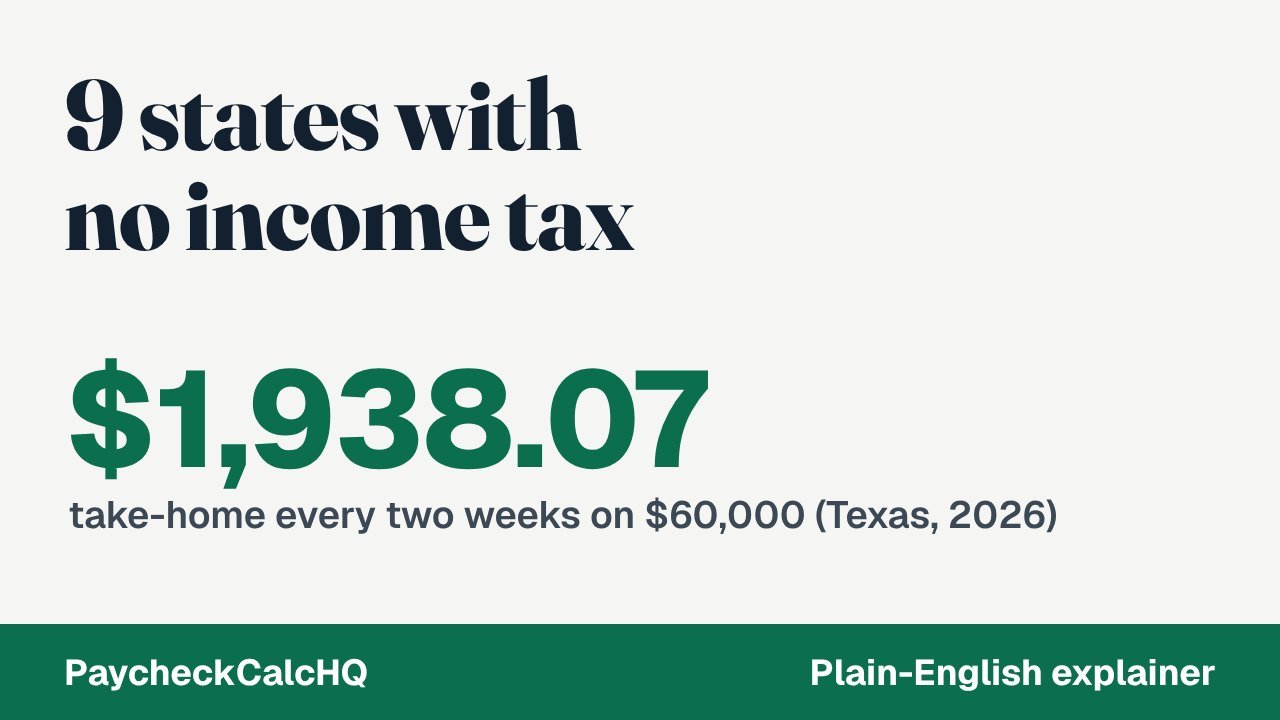 1:18States with no income tax: what you still payThe 9 states with no state income tax on wages, what employers still withhold, and take-home pay on a $60,000 salary in Texas, Florida, Washington and Alaska compared with California.
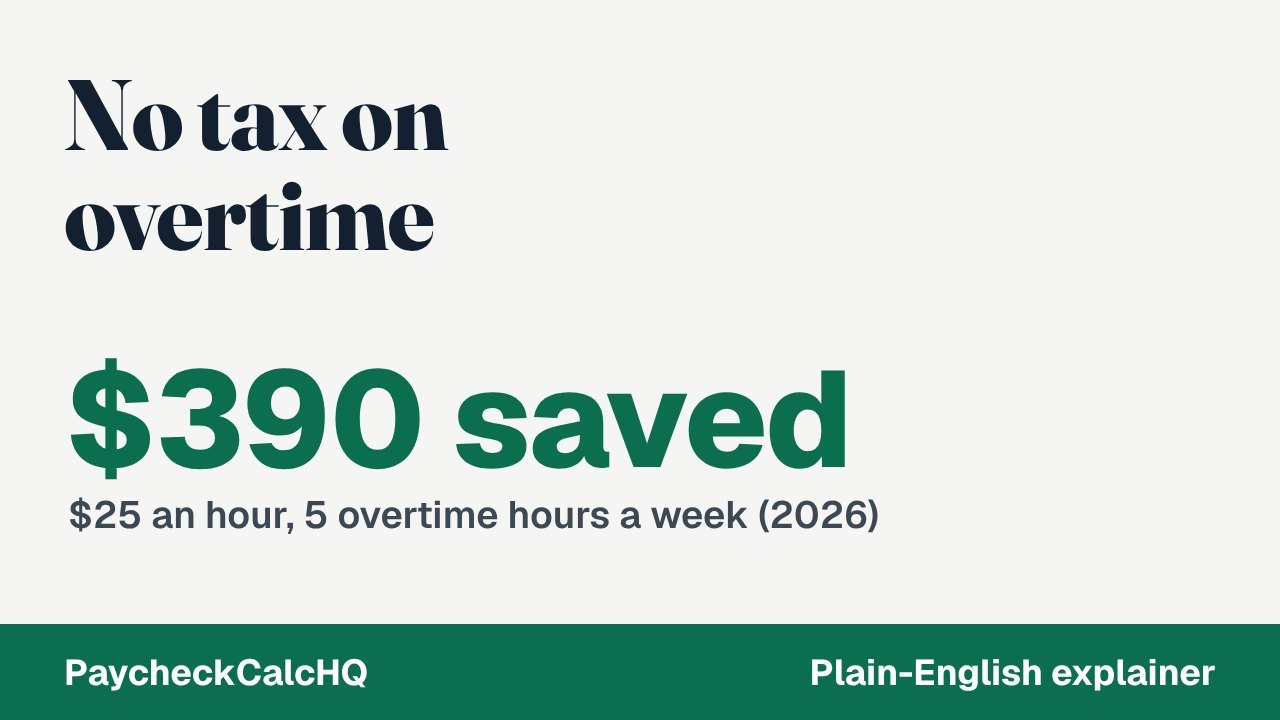 1:37No tax on overtime: how the deduction worksThe federal overtime deduction for 2025 to 2028, in plain English: what counts as qualified overtime, a worked example at $25 an hour, the limits, and what does not change.
 1:28401(k) contribution limit 2026The 2026 401(k) limits from the IRS: $24,500, the $8,000 catch-up at 50, the $11,250 catch-up at 60 to 63, the amount per paycheck to reach the limit, and the effect on take-home pay.
 1:51HSA vs FSA: the 2026 limits and your paycheckHSA vs FSA for 2026 open enrollment: who can use each, the 2026 limits ($4,400 / $8,750 HSA, $3,400 FSA), the $680 carryover, and what $100 a paycheck costs you.
 1:38FICA tax: Social Security and Medicare on your paycheckWhat FICA tax is, the 2026 rates (6.2% Social Security up to $184,500, 1.45% Medicare), the employer match, the 0.9% Additional Medicare Tax, and examples at $60,000 and $250,000.
 1:41Net vs gross pay: what comes out of your paycheckNet vs gross pay on one real paycheck: $25 an hour for 80 hours, a 401(k) and health insurance before taxes, then federal tax, Social Security and Medicare.
 1:39No tax on tips: how the $25,000 deduction worksThe federal deduction for tips, 2025 to 2028, in plain English: who qualifies, what counts as a qualified tip, the $25,000 limit, a worked example, and what taxes still apply.
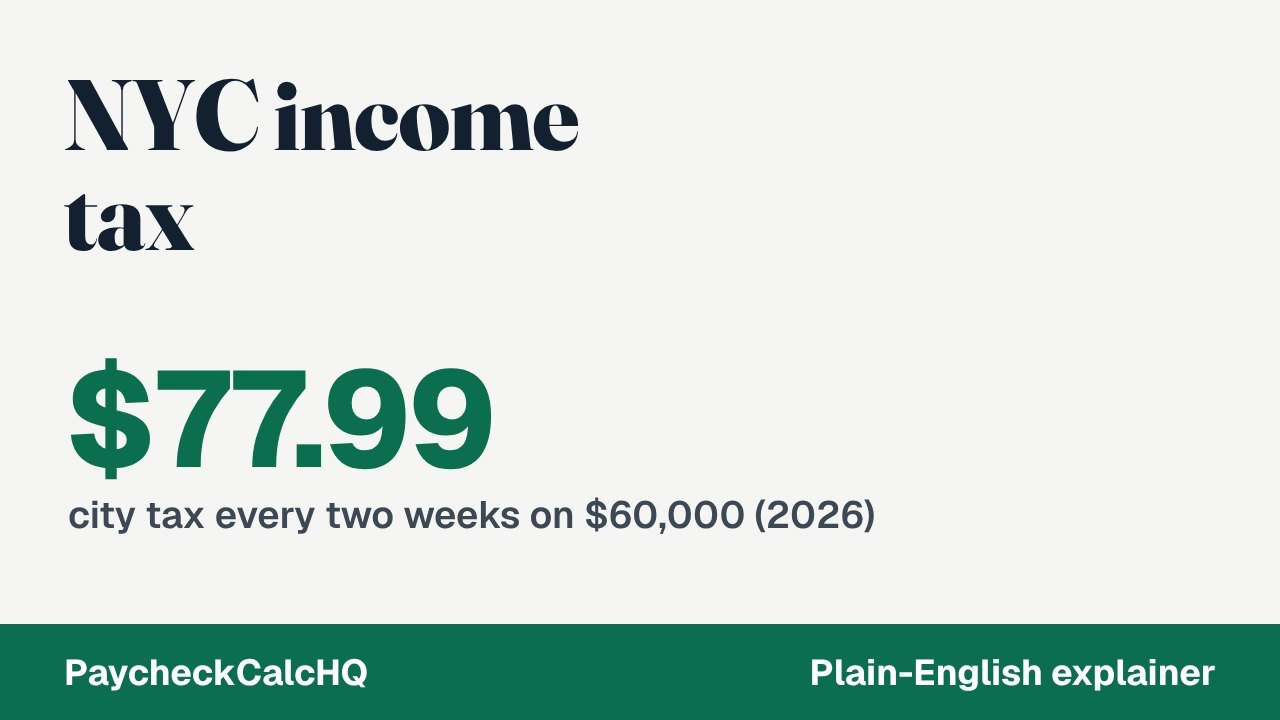 1:08New York City income tax on your paycheckWho pays New York City income tax, and what it takes from a $60,000 paycheck in 2026: state tax, city tax, disability insurance, Paid Family Leave and take-home pay.
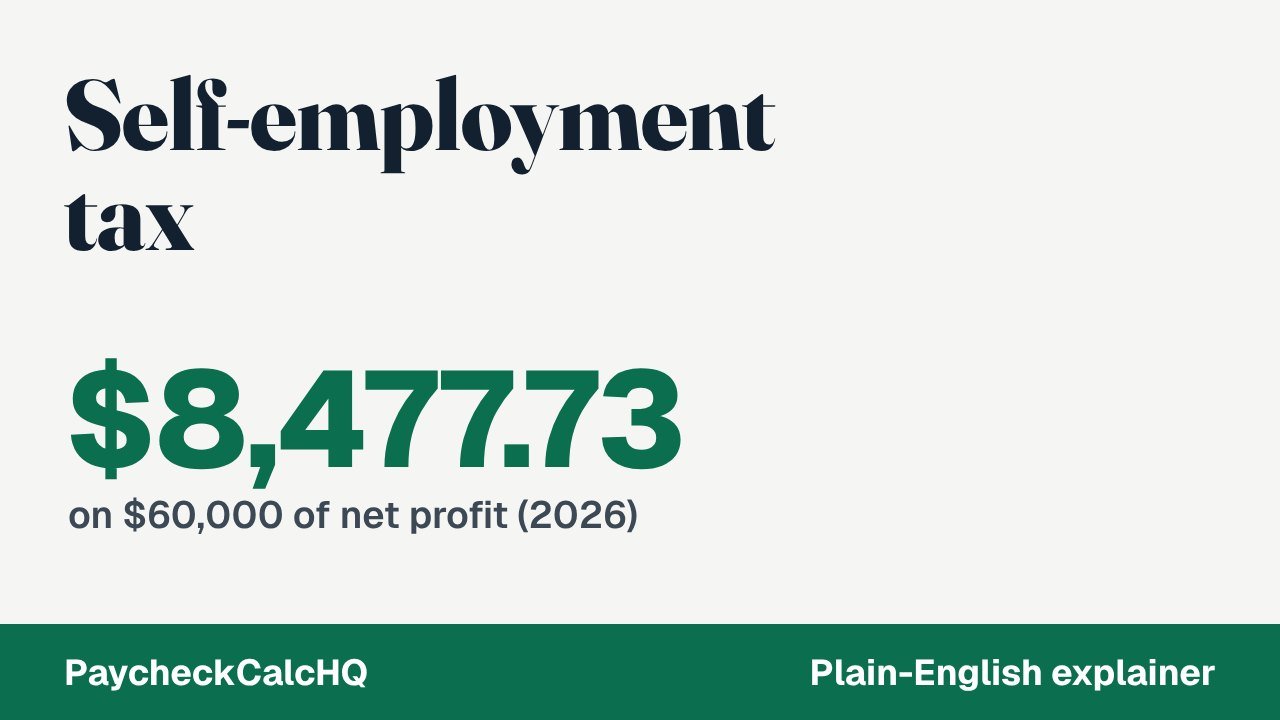 1:43Self-employment tax: how to calculate itHow self-employment tax works in 2026: 15.3% on 92.35% of net profit, the $184,500 Social Security wage base, the $400 rule, the deduction for half, and estimated payments.
 1:321099 vs W-2: who pays more tax on $60,000A W-2 employee and a 1099 contractor, each paid $60,000 in 2026: who withholds tax, Social Security and Medicare, income tax, and the total federal tax for each.
 1:46How to fill out Form W-4, step by stepFill out the 2026 Form W-4 step by step: filing status, multiple jobs, dependents ($2,200 per child under 17), other adjustments, and the effect on your paycheck.
 1:08Biweekly vs semimonthly payBiweekly pay (26 paychecks) and semimonthly pay (24 paychecks) compared on a $60,000 salary: gross pay, take-home pay, and the months with three paychecks.
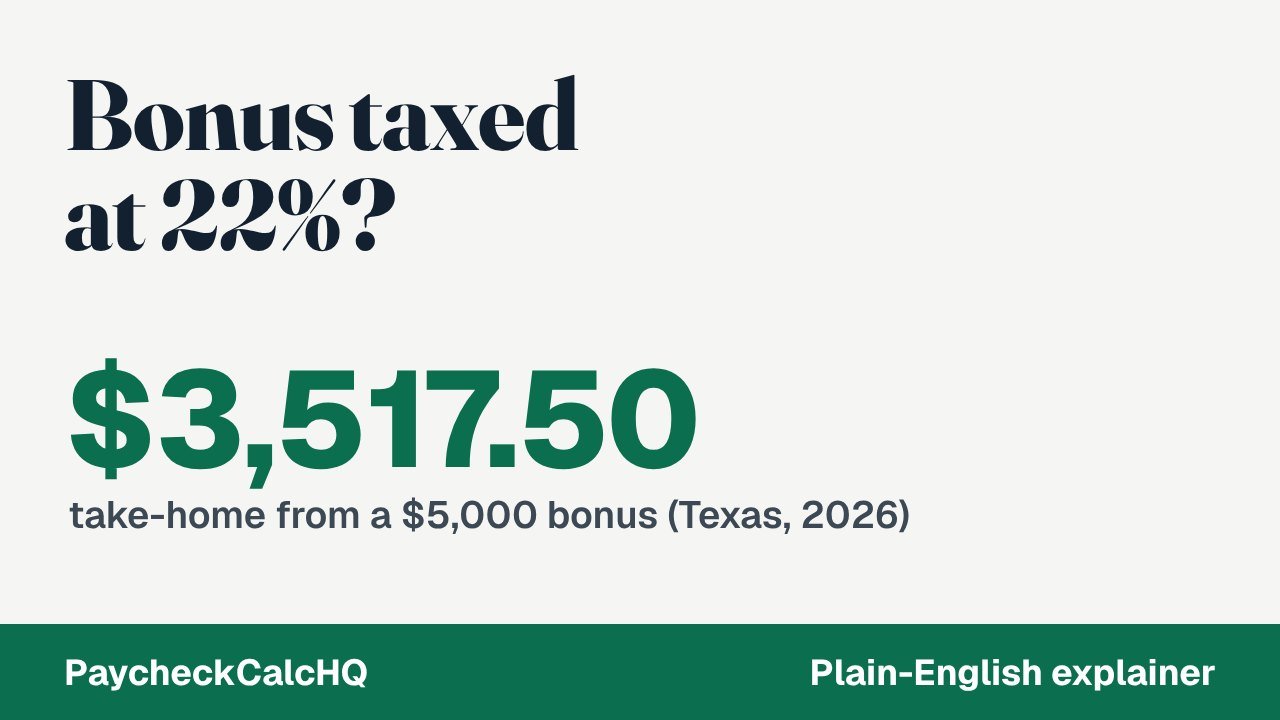 1:31Why your bonus is taxed at 22%Why employers withhold 22% federal income tax from a bonus, what a $5,000 bonus pays after taxes, the aggregate method, and why 22% is not your final tax.
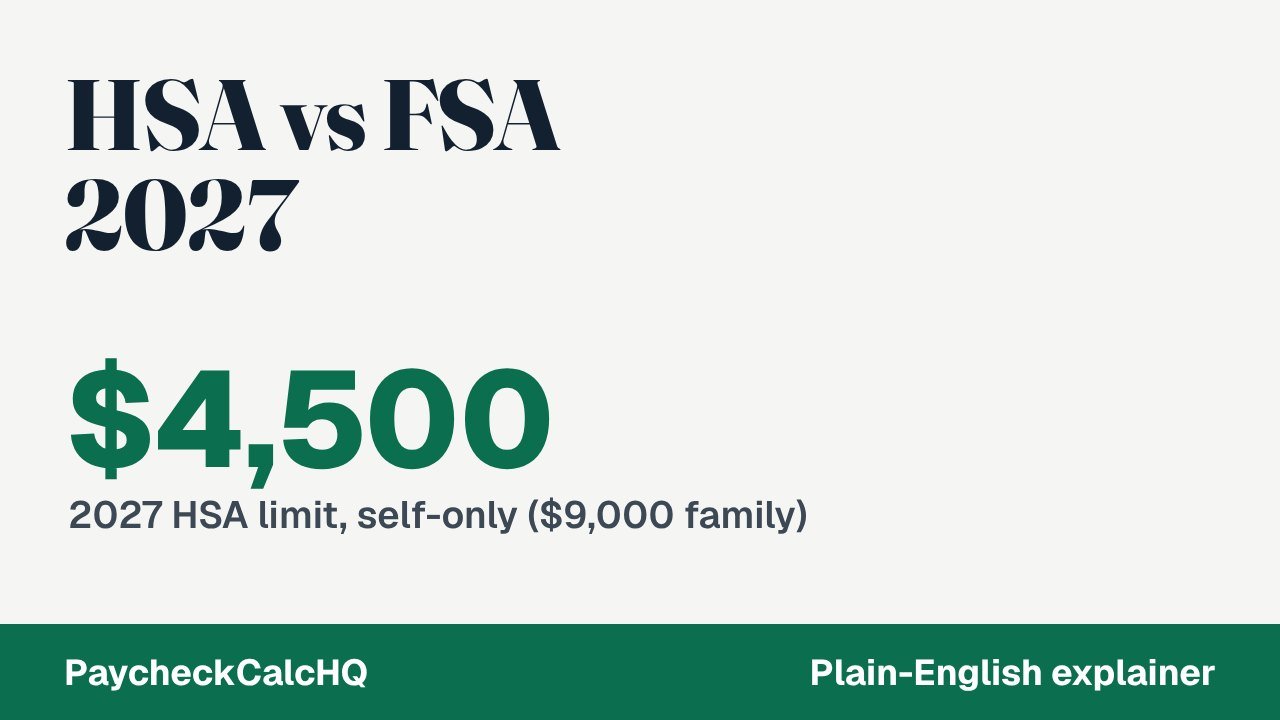 1:53HSA vs FSA 2027: the new limits for open enrollmentThe 2027 HSA limits from the IRS ($4,500 self-only, $9,000 family), the 2027 high-deductible plan rules, the new direct primary care rule, and what to know about the health FSA for 2027.
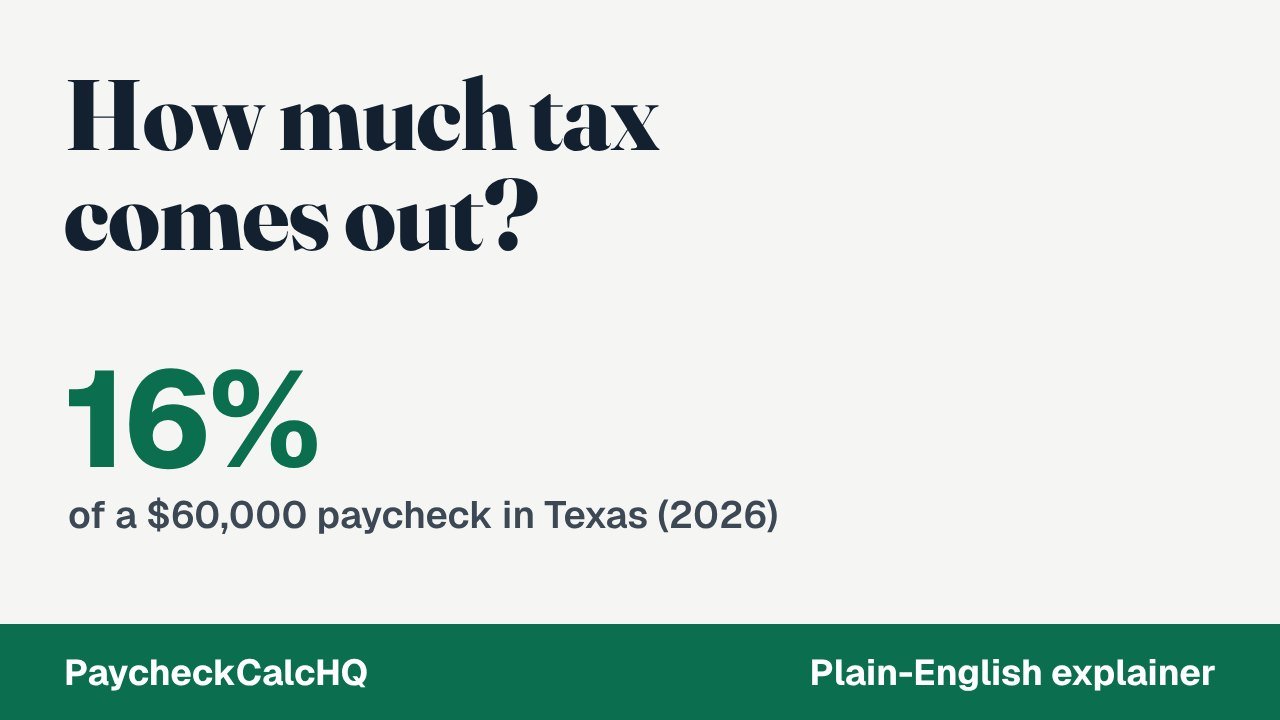 1:25How much tax is taken out of my paycheck?How much tax comes out of a paycheck in 2026: federal income tax, Social Security and Medicare at $40,000, $60,000 and $100,000, and what state tax adds in California and New York.
 1:34Social Security wage base 2026: why your paycheck gets biggerThe 2026 Social Security wage base of $184,500 ($192,300 in 2027), when Social Security tax stops, and how much bigger the paycheck gets, with a $240,000 salary example.
 1:16$60,000 salary: take-home pay for each paycheckThe parts of one paycheck on a $60,000 salary paid every two weeks in 2026: gross pay, federal income tax, Social Security, Medicare, and take-home pay in Texas and California.